
Bruce Outridge
Artist | Author | Radio & Podcast Producer | Television Host
Patience is a virtue, do you have any?
If you read my post from last week you will see the 12 steps of professionalism that I think are important to becoming a professional driver. The steps also relate to anyone dealing with customers, coworkers, etc. Life on the road can be downright stressful to say the least, people who can’t drive or delays at companies, busy city centres and the like. Patience is critical to survival in the transportation industry. I am not sure who told certain drivers that if you yell, scream, and jump up and down you will get loaded faster, but that is common place on many docks across the country. So how do you handle the pressure of a delay?
First know what your policy is for delays. If you’re a driver do you know at what point your company starts to charge clients for delays? At what point is a co-worker, not replying back to a project detail causing your productivity to suffer? Most of us hound someone to get the results desired, but that doesn’t help team spirit, work relationships, or get that task finished to the standards required. First take a deep breath and remain calm. Educate the person on the importance of completing the task and that at a certain point the company will start charging for the delay. If that doesn’t start moving things any faster send them another reminder and inform your supervisor of the delay and the former discussion with the person involved. After that keep an eye on your time, move on with another project and make sure you note when the task was completed so you can inform your supervisor. Make sure to take down details of the person involved or department and any other particulars. Now I must stress that you don’t get hostile during this process, but keep your cool and explain that you have a job to do. The reason that it is important to document the situation is to give the company back up in order to either fix the delay or get compensated for the delay. I hear a lot of people complain about delays, but when you ask them specifics of the delay they can’t remember. Better yet is they complain to the boss but don’t have any particulars to back up their claim. If that’s the case it may as well not even happened. When I am managing projects from clients I mark down dates that they reply. It helps me gauge length of times for project estimates, but more important is when they come back to tell me the project took too long I can pull out a file showing the approval process and how long it took them to reply and so on.
Don’t let your productivity suffer because of someone else’s situation. Take ownership of your position.
About the Author
Bruce Outridge is a leadership consultant specializing in the transportation industry. More information on Bruce can be found at http://www.outridge.ca
12 Steps of Professionalism
A professional driver is more than someone who can just drive a big rig down the highway, there are regulations, hours of service and more to worry about. That’s not to mention the the load your carrying etc. Below are my 12 steps to being a professional driver. These are not in the order of importance, but there is a reason for outlining them this way, see if you can find out why:
- Patience
- Respect
- Ownership
- Friendly
- Equipment
- Safety
- Strategic
- Integrity
- Orderly
- Negotiable
- Accountable
- Licensed
I’ll go into the specific steps in future posts, but if you are professional driver see how many of these steps you need to improve on to make you the true professional that you are.
About the Author
Bruce outridge is a motivational speaker on leadership for the transportation industry. More information can be found at http://www.outridge.ca
Time is Money – How Much Have You Spent?
In the business world time is money or so it is said. If you are wasting time you are wasting productivity therefore you are wasting money. That holds true for many of us in business or not. It’s all around us as well, just watch people as they rush around all day trying to catch up with this or trying to complete that. If you really want to tick them off ask them to complete a task for you by a certain time, and watch the fireworks go. Now some people don’t feel that time management can work for them. The excuses I get are that, “too many outside factors affect my time frame”, or “I am paid to work here for eight hours anyway”. Those situations may be true but that doesn’t mean you can’t be productive within that time frame. The group that probably needs time management the most but refuses to use it is the truck drivers of world. As I speak with owner operators across the country through seminars and workshops I hear the same thing, “Dispatch doesn’t give us the time we need” or “we can’t make any money!” That may be true but are you doing the things that are important for your business to be successful by using time wisely? As an entrepreneur working on and in my business I have to make sure I am working productively to not only grow my business, but completing the projects I receive from my clients. I also have to watch the outside factors don’t eat away my time, so I have to remain very scheduled to be productive. So how do you do that without losing sight of your lifestyle?
If you’re an entrepreneur then the best time management technique that I enjoy is through using colour to manage your time. To learn how to do that read my past article on how to “Colour Manage Your Time” which is posted on my blog. However we are talking about the professional driver here and there is certain situations that you will come across that will affect your time. Those outside forces are necessarily under anyone’s control as they may be weather or traffic related. You also have hours of service which tell you how much work you can put in during the day and so on. But as an owner operator you need to keep your eye on the profit and loss of your business and also future stability of the business through productivity. Many owner operators feel they don’t have to work hard or can schedule time off whenever they want, but that isn’t true as those wheels need to keep moving. So how do you plan for all of the unknown factors that affect your schedule?
The first part is to know your breakeven point for the business on a monthly basis. This will be based on the budget you created when starting your operation as an owner operator. How much work do you need? The next step is to make sure you know how much profit you want to make above your costs, is it 5%, 10%, or 20%. Now break your mileage in to the days you have available to work. So let’s say you need to complete 500 miles per day to create the income you want for your business. Your going to lose a certain amount of time unloading, loading, clearing customs, etc so that needs to be factored in to your calculations. If you are waiting to be unloaded for an hour that should be replacing the income for that driving time being lost. So as you factor in all of those situations you will be evaluating your operation to make sure each day you are making the money you have set out to make. Now let’s assume you are working in Canada and have 13 hours of driving time available to put in the miles. Five hundred miles will take approximately 10 hours of driving time. Factor in your breaks and inspections and you should require around 12 hours a day without any major delays. So set your daily limit at 12 hours and you have a safety net of an hour. Just because you can run 13 hours a day doesn’t mean you should. If you are trip planning effectively and managing your time, while watching your business you will find you are more productive with less time. You can also increase your profits by keeping your finger on the pulse of your business. Manage your time effectively on and off duty and you will succeed at time management. Remember time is money!
About the Author
Bruce Outridge is a leadership consultant for the transportation industry and entrpeneurs. To view more information on programs and services available visit http://www.outridge.ca
Marketing Your Plan or Planning to Market
I recently gave a presentation to a group of enthusiastic recruiting specialists on using social media to find professional truck drivers. There is a huge driver shortage coming in the industry and marketing and recruiting will be a significant issue. The one thing that was stressed through the presentation is that just getting onto social media will not have people flooding to your door. It is just one piece of the marketing puzzle.
For an entrepreneur it is important to have a plan for your marketing strategy on paper before you even sign up for social media or any other type of advertising program. Know your audience, know your demographic profiles, know your cost and budget, and know your time frame. It will take at least six months of dedicated work to get any marketing program off the ground. Even more important is do you have the dedication to keep the train moving even when nothing is happening. For more on that check out my last blog post called “Working Your Game Plan“.
Now the other problem is planning your marketing startegy so much that you don’t actually implement it and do nothing. The fun part is planning is having the action plan. The hard part is actually doing the action plan. I have seen many great ideas sit on the sidelines due to inactive participants. It can be very hard work to keep it going.
The best way to start is to take small bites, and get them going sufficiently before taking another bite. Build your network slow and steady and you will have a stronger network. Keep it sustainable and you will be able to manage it over the long term. So to recap, evaluate the media you can afford and that will get you in front of your potential clients. Create a time frame for success and build it slow. Keep at it with dedication, even when not much is happening. You’ll make it just keep going, by taking small steps you can tweak your plan as you go along.
About the Author
Bruce Outridge is leadership consultant in the transportation and business sectors. He specializes in the subjects of complacency, time management, customer service, and marketing for entrepreneurs and professional drivers. For more information on programs and services visit http://www.outridge.ca
Are you following your game plan?
Are you following your game plan? Many people especially entrepreneurs, marketing specialists, artists etc. have great intentions of creating a marketing plan and implementing it, however when they don’t see any results they start to slip into that complacency stage assuming nothing is working. This is very true especially with social media where you hear that all you have to do is sign on and then people will flood to your business. Nothing is further from the truth.
Anyone starting any kind of long term project, business, or marketing effort will need to realize that it may take anywhere from 6 months to a year or more to start seeing the fruits of their labour. The important part is to keep working at it with all of your might. This has happened to me many times through our various business ventures. I remember when I started my blog and every week posted an article wondering if anyone was even reading them. Then out of the blue I would get a reply from someone with a comment. The same thing happened on Twitter when I first signed on, zero followers and I didn’t follow anyone, heck I barely ever signed on. But I put it on my to-do list anyway and kept posting. Today I have 15 people following my comments on Twitter. Sure it’s not huge like Lady Gaga, and I’m sure if I spent even more time telling people what I ate for lunch and giving more comments on subjects I could gain a lot more. My newsletter has just started bringing in clients who have been following me for a year. People are ready to listen at different times in their lives and if you keep moving forward you will be there when they need you.
The point is to keep working, and even more important is that I am following my original game plan for social media marketing. I’ve used social media as an example but I have found the same ground can be gained through other areas by just staying with the plan. Your gut will tell you when you’re ready to grow, so stick to the plan. I enjoy reading my horoscope once in a while, I’ll read it and it will say “things are going on in the background that you don’t know about”. Then down the road I will talk with someone and they will ask “if my ears were burning” because they were recommending me to someone for an opportunity.
So if you’re the type of person to let your guard down when you don’t see things happening then I suggest you take those scrap pieces of paper that you wrote those original goals on ,dust them off and get back to work on them. The success in hitting goals is making sure you follow through with the work part.
The author is a consultant in the transportation and business markets. To learn more about Bruce visit Outridge Consulting Services at http://www.outridge.ca.
Learn About Inspiring Youth TV

Watch Cashing in on Creativity Television

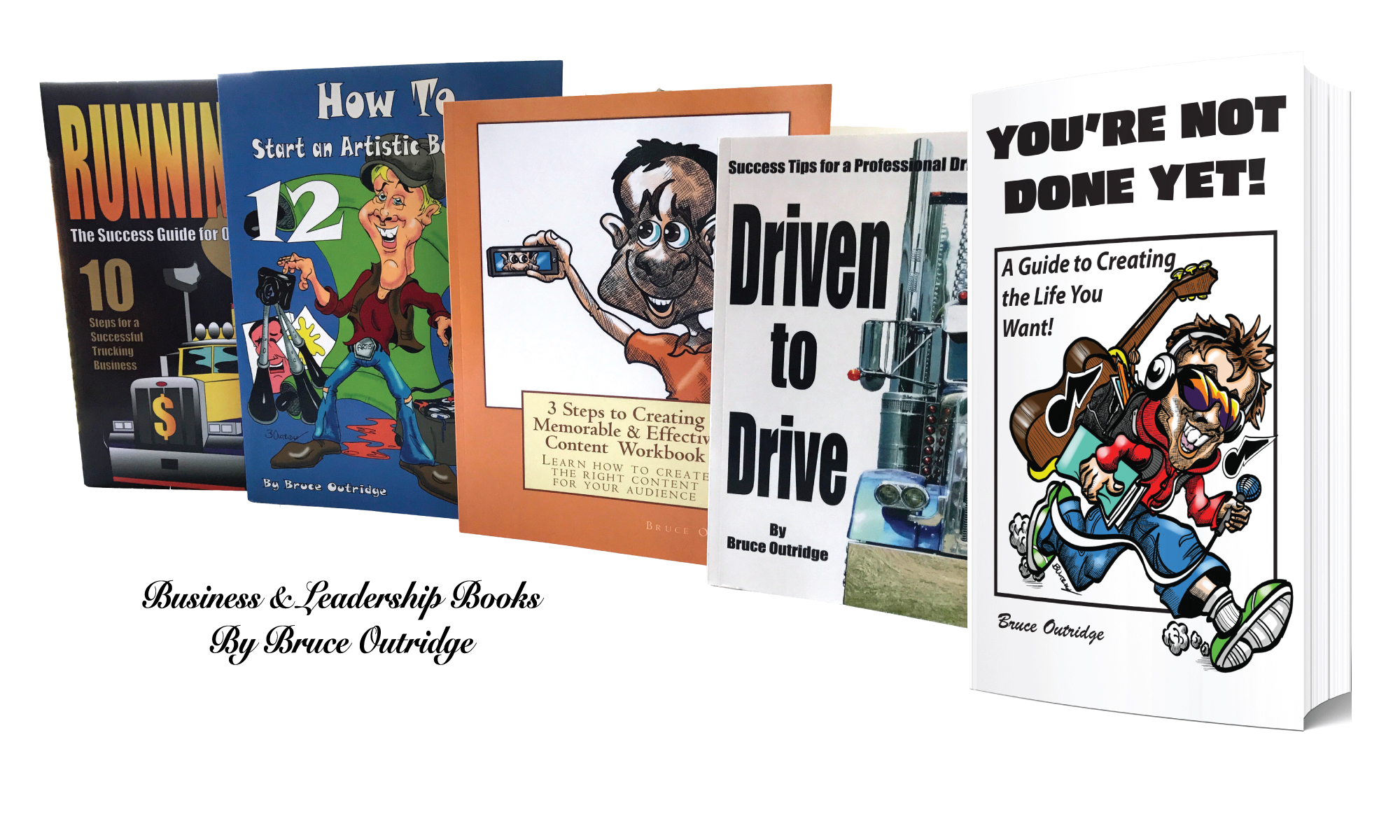
Get Bruce’s Latest Book

Get Bruce’s Books
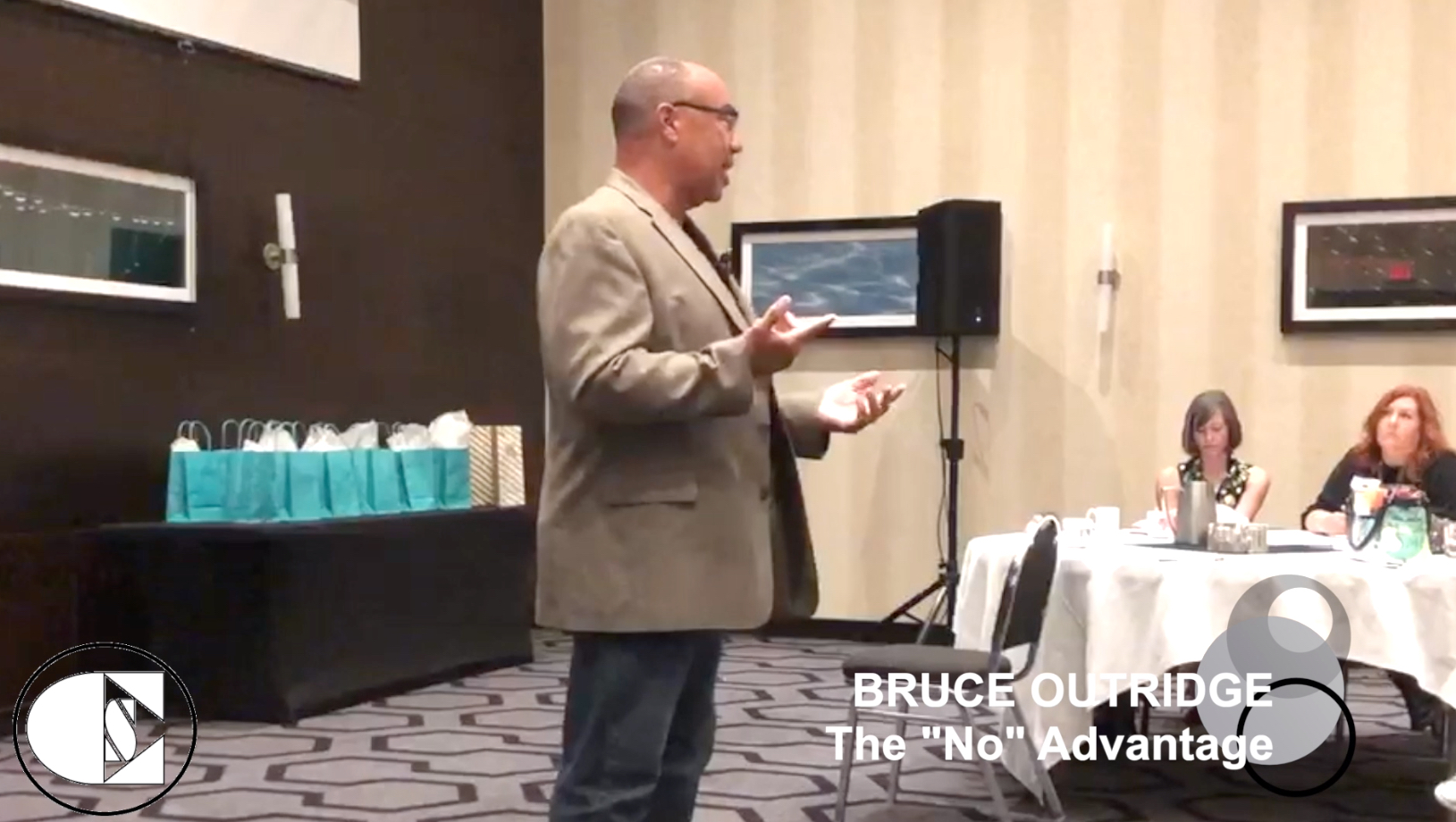
Book Bruce to Speak to Your Group
The Lead Pedal Podcast with Bruce Outridge

 The Lead Pedal Podcast
- The Road to Red Seal-Why Trucking Must Raise the Bar in 2026: LP1542
- Why Red Seal Could Change the Trucking Industry | John DeGroot Explains: LP1541
- Red Seal or Real Road Experience? Veteran Driver John DeGroot Tells It Like It Is: LP1540
- From Driver to Recruiter to Podcast Host | The Career Evolution of OJ Sidor: LP1539
- Life Behind the Wheel with OJ Sidor | Real Stories from the Road LP1538
- Lead Pedal Transportation Events Calendar March 2026
- What's New on Lead Pedal? March Updates, Radio Highlights, Fan Club & Upcoming Guests! LP1537
- Purchasing Equipment as a New Owner-Operator | Robert Misheloff: LP1536
- Financing a Truck as an Owner-Operator: What You MUST Know | Robert Misheloff: LP1535
- Shifitng Gears Ep13: Built to Last-Owner-Operator Success Stories
Bruce Outridge Productions





 Bruce Outridge