
Bruce Outridge
Artist | Author | Radio & Podcast Producer | Television Host
Have You Created Chaos or Structure in Your Team?
Jeff is a supervisor that wanted to have a good relationship with his team. They had lots of experience, knew how to do their job in a professional manner most of the time so Jeff didn’t feel that he had to keep a tight eye on the team. He didn’t want to be known as the micro manager and really couldn’t because he lacked the expertise of actually doing the job although he had plenty of knowledge of the processes. They were left to their own as far as departure with their loads, how they conducted the run as a whole, and how many days they stayed on the road. It sounds like a great deal for most companies and the job of supervising the team should roll along fairly easily. In the beginning things worked great until upper management decided to shift things around and brought in a new supervisor. This new supervisor did have actual experience in the job of delivering product to their customers and with that knowledge started to notice problems in the team’s performance. As the new supervisor tried to correct the problems the team started to fall apart. For too long everyone had their own schedule and way they liked to do things so when changes started to occur it created chaos with many of the team members.
This happens in many organizations and is usually a result of giving too much power to team members or a supervisor or boss without the knowledge needed to properly lead the team. By giving the team freedom to do their own thing you set a culture that lacks structure and control. Once this type of program has started it is very hard to change this later on down the road. The problem is usually more apparent in large organizations where there are many levels of management and different teams focusing on different types of projects or processes. If this goes on for too long it will be virtually impossible to repair in the future. So how do you change the situation if this exists at your company?
The first piece of the puzzle is to evaluate your position as a whole. Do you know what your team does to get the deliveries done? Have you experienced a run first hand, carried the boxes into the customer to find out how tired a person can get? What problems are the team members experiencing on the road, that to me is the most effective way of gaining respect from your team and getting to know them. Once you have done that and by the way that should be an ongoing process, take a look at how the deliveries are structured, do team members have the proper equipment, enough time, and enough resources? With this knowledge you are now in a position to create new structure and processes based upon actual experience. You may have to rein in some of the freedoms the team had before and that may be hard for the team to take so just hold your stance, because letting it go will not help you down the road. Remember to make the changes you have to have the reason why a change should be made, the experience to know how it will affect the team, and the process to move the team forward. Too many supervisors put new processes in place, but don’t have the experience in the operation to understand how the change affects the operational team. This causes problems in the ranks making the change hard to accept. Being a team leader means not only managing the team, but supporting the team, and you can only do that through experience and knowledge.
About the Author
Bruce Outridge is a leadership and business consultant for operational staff and the people who lead them. He is well known in the transportation industry. Program details can be viewed on his website at www.outridge.ca
Owning Your Success by Playing by the Rules
Have you ever watched the careers of different individuals and wondered why some succeed and are profitable and others always seem to be struggling? I see it over and over again in my travels and always wonder what makes some people tick and others lose out. Now there is two mindsets to this thought process; some say it doesn’t matter how you finish as long as you finish first, and others say it is best to finish second and ethically than to be first through cheating. I agree with the second thought process. Here is why, most criminals get caught sooner or later, and those types of people spend too much energy trying to beat the system rather than working within it. Now this article is not about becoming a criminal, but about steering your career by abiding by the rules of engagement. Let me share a story with you and you may recognize a person like this on your team. Now this story is based in the transportation industry but you can find similar examples in almost any industry. By the way I have changed the names to protect the guilty.
Let’s call this person Jack, he has been driving truck his whole life. He learned to drive from his father and the family has a long list of truck drivers in it. He was taught early on that the most important part of creating money as a truck driver is to put in as many miles as you can, no matter how you do it drive those miles under your belt. Jack succeeded at that and companies loved him because he would do anything they asked, run around the scale, driver over the allowable hours, and take heavy loads whenever asked. With that attitude it was no problem to get jobs and he always seemed to be working. There was one problem however; he didn’t care about his career. As long as he was making money he didn’t give another thought as to how to proceed to the next step. Due to his non caring attitude jack did a lot of damage to equipment, refused to go that extra mile by keep his truck clean and would eventually be fired. He only had one goal and that was to get on with a good company that paid well and even though he bounced around companies he finally got that chance and ended up with a great company. The problem was that the mindset he had created early on never left him and while trying to make that extra dollar again he ended up rolling the truck. He made it out alive however; he has a hard time finding decent companies to work for and will never find that gold mind that he once worked at again.
Now Tom on the other hand did not come from a long line of truck drivers, but a line of accountants. He started at the bottom of the industry moving furniture and gradually through hard work, passion for his positions, and putting extra effort into his career, moved up the ladder getting experience in various industries within the transportation sector. In the long run he made better money than his counterpart Jack by abiding by company rules, putting in extra effort, and looking for opportunities to do what he loves to do. How did he make more money than Jack you ask? He worked for better companies that paid more per mile, he achieved higher positions that paid in various ways such as salary or percentage that created more income than by the mile, and he kept his record clean giving him a good name in the industry. He has since gone onto other avenues and opportunities within the transportation industry.
Now I tell you that story so that you will look hard at your career in the past, present, and future to decide if it is taking you on the path you had hoped it would. Part of the reason people go down the wrong path is due to the fact that they listen to the wrong people regarding their career. I myself was told over thirty years ago not to get into the industry because you couldn’t make any money in it. Thank the Lord I didn’t listen to that guy or I would still be pumping gas at the local gas station. Owning your success is about believing in your own ways of doing things that make you unique while abiding by the rules and regulations of your industry. Sometimes money grows on trees so think of your career as the trunk and branches.
About the Author
Bruce Outridge is a business and leadership consultant with a strong background in the transportation industry. You can view more information on Bruce by visiting his website at http://www.outridge.ca
Are you leading by example?
Think hard about that question, are you leading by example? There is a thin line between walking the talk and walking the walk once you are in a supervisory position. Sometimes for new supervisors the position can go to their heads to the point that they manage themselves right out of a job. Now there are many schools of thought on this and they can all be right or wrong depending on the circumstances of the particular situation. In general however, you should be trying to lead by example and walking the walk. Now when I say the walk I am not talking about doing the job of your team, but doing your own job. Your job is managing your team, helping them solve performance problems, operational problems, and supporting them through training and advice. Where I see many supervisors missing the boat is in the support area. Think about it, when there is a performance issue your on top of it, when there is a problem with equipment your on it and have it fixed. What about support issues? What is happening when things are going good? How are you addressing training issues and supporting your team? Most supervisors wait until there is a problem and then start looking for training to fix the problem. At that point it is too late; you are working in emergency mode trying to put out the fires. When you should be looking for training is when things are going good and you want to improve your team. Doing it the other way is like showing up to the fire, and then having to search for a water source, by the time you find it you’re house is already burned down. By focusing on improvement you are looking for a water source at the fire station before the fire alarm goes off. Think about that scenario and now think about your team, where do you need to improve?
It may be that your team is running along fine, so it may be an issue of cross training people to make sure positions are covered should there be an illness. By cross training a person they can let go of some old habits, learns some new skills, and it makes your business more flexible should there be problems down the road. You may even find a diamond in the rough that better suits a position that you had not thought about. Entrepreneurs and quality team leaders are always looking for ways to make an operation better and not everything needs to cost an arm and a leg.
If you’re not sure of the interests of the people of your team then it’s time to have some interviews to review performance, goals, etc. To me training should be goal oriented. If you’re waiting for a problem to happen before you start training them something is wrong. Think preventative, there is a reason police and fireman are trained before they start work and not after. So how do you lead by example in this area, look to improve team performance before problems start? Suggest ways to improve the team and ask for input from the team members when no problems are apparent and you will find everyone will be more focused therefore making your business more efficient, focused, and profitable.
About the Author
Bruce Outridge is a leadership and business consultant specializing in the transportation industry. You can view information, programs, and services on his website at http://www.outridge.ca
Do I need customer service as an owner operator?
Most drivers and owner operators forget the importance of customer service because they don’t feel that they have to deal with the clients directly. They are very wrong and in a big way. If you are an owner operator have you thought about who your clients are in reality? Doing this exercise may surprise you if you take it seriously. So let’s look at how you affect the clients while conducting deliveries and communicating with clients. If you run the open board you may not concern yourself with customer service because many drivers don’t think they will return to that client unless they are on dedicated run. The truth is that any client that ships or receives goods with the company by truck deserves the best customer service available from every driver. In the industry we hear about customer service departments, business executives, and don’t see how we are involved in the important aspects of the client but the truth is that each customer has a number of points of contact that the company will be in contact with them. So what are those points?
Usually for any large contracts the top executives or appointed sales force will be involved and that will be the first point and most important in the beginning. That will be the point where all of the negotiations will take place to secure the customer’s freight contract. Once that point is completed it will diminish in contact to a point, but is still a critical point in the process. The next point will be the transport company internal client service department, such as customer service, order management, and so on. This point of contact is also critical and may or may not be in direct contact with the client depending on the order management system. This second point may also be done by a third party such as a load broker or load board service, but is still critical to great client service. The next point is you, the driver and may be the most critical point of all for the company. You are the live person dealing with another live person and basically could be the face of the company. Whether you are dealing with a receiver on the dock, a shipper in the yard, or phoning the front office for directions you are the face of the company and should be representing them as such. How you dress, the way you talk, and the ways you act are all important to how the client views your company. Are you pleasant to be around, are you patient when waiting for the load, is your trailer organized and clean? Or are you the opposite, have a filthy trailer, you haven’t showered in a few days, and are tired and grumpy, just a picture of professionalism to be sarcastic. Everyone has a part to play and you need to do yours.
About the Author
Bruce Outridge is a leadership and business consultant specializing in the transportation industry. He can be reached at http://www.outridge.ca
Learn About Inspiring Youth TV
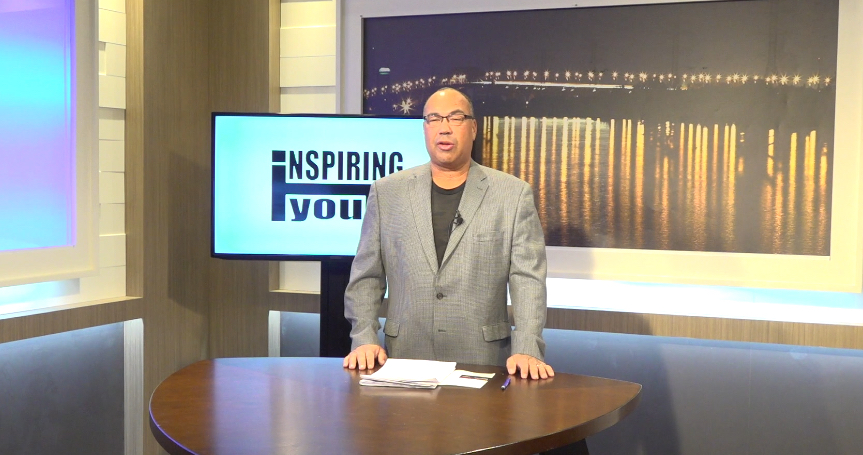
Watch Cashing in on Creativity Television

Get Bruce’s Latest Book

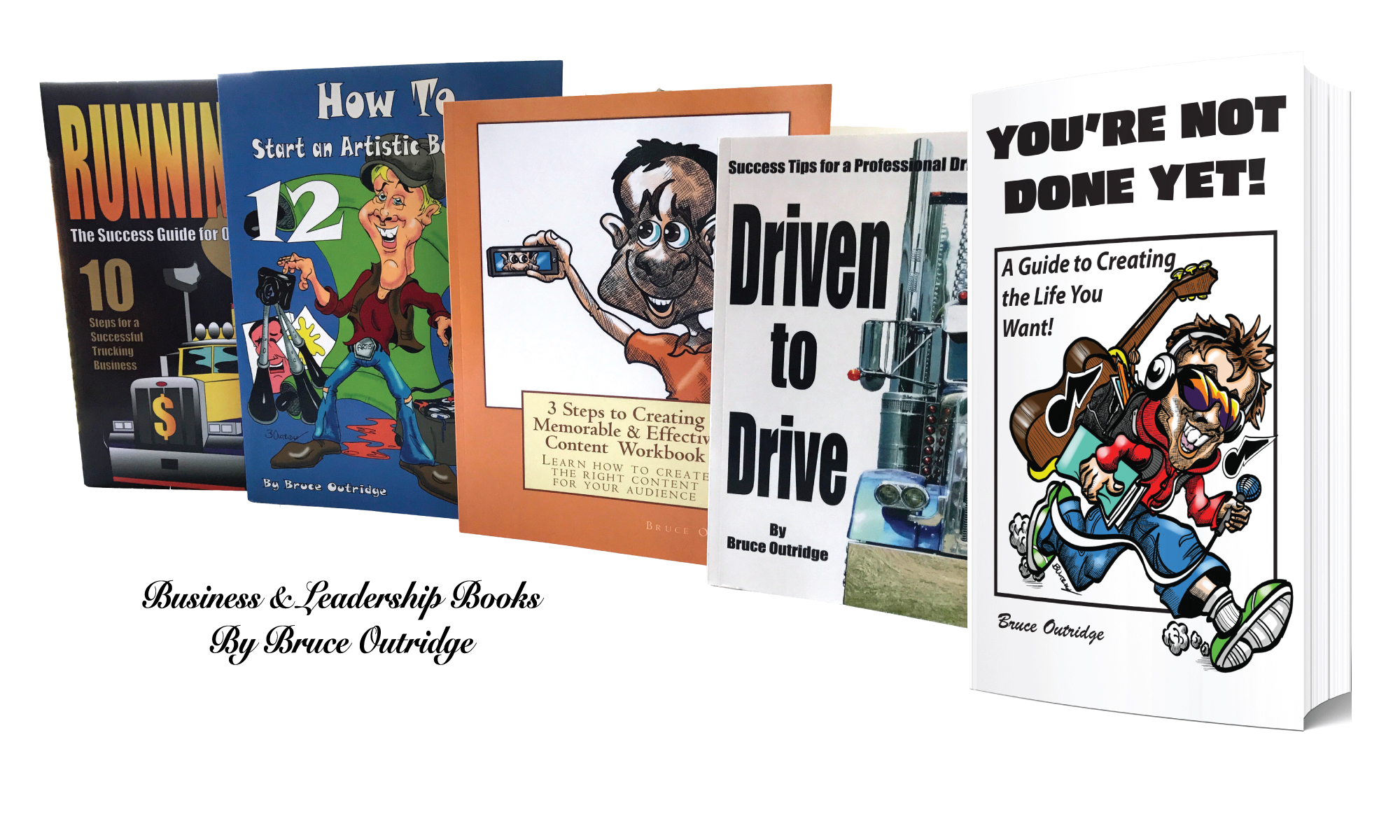
Get Bruce’s Books
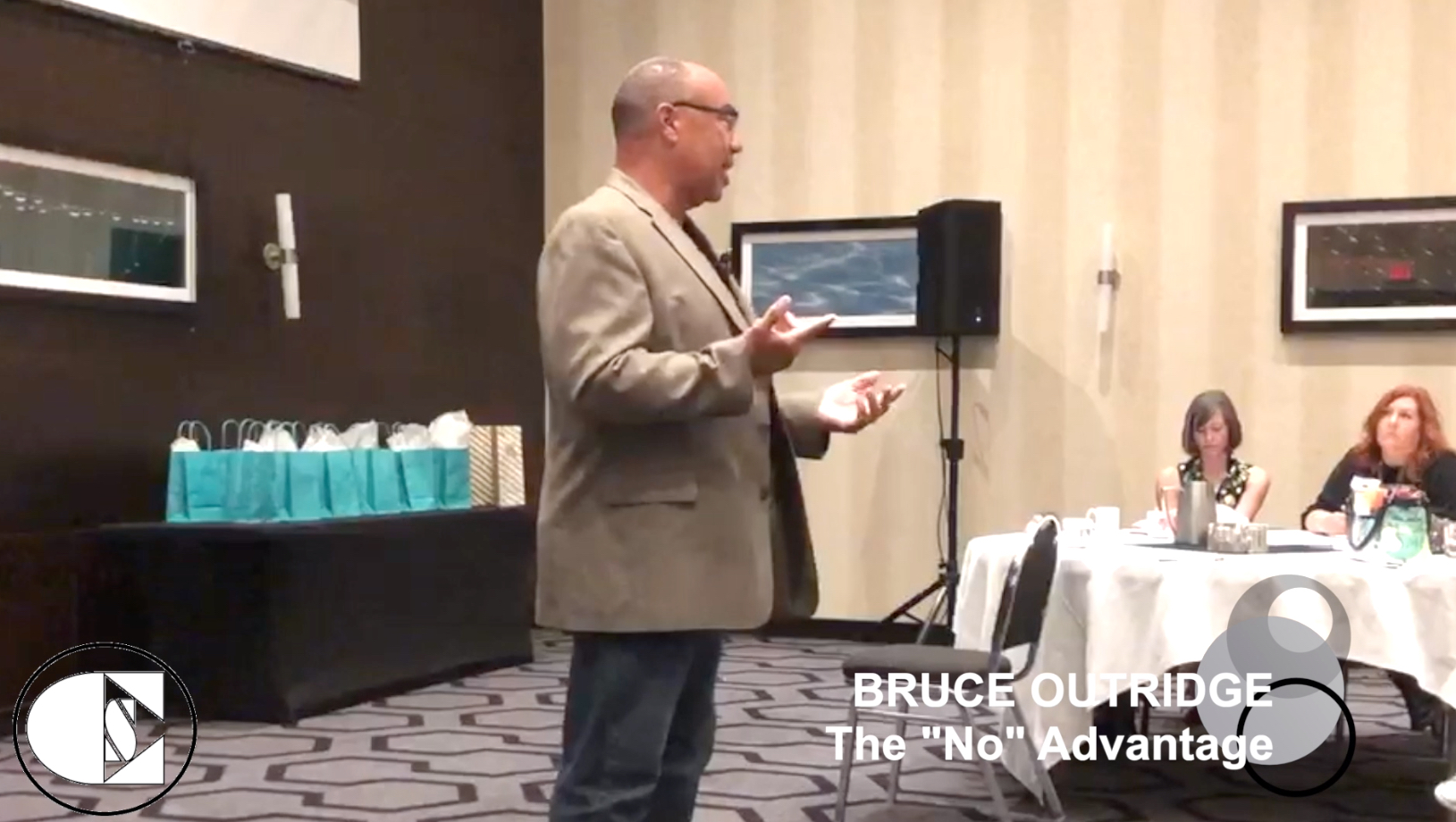
Book Bruce to Speak to Your Group
The Lead Pedal Podcast with Bruce Outridge

 The Lead Pedal Podcast
- An error has occurred; the feed is probably down. Try again later.
Bruce Outridge Productions