
Bruce Outridge
Artist | Author | Radio & Podcast Producer | Television Host
What Would You Do?
Just when I think the world is becoming a little better I hear or read a story that blows my mind. Recently in the news was the story of a boy drifting at sea waiting to be rescued with his friends for days on end. Unfortunately the friends of this boy passed away waiting to be rescued but the story in the paper tells of a cruise liner passing by and people watching the boys in peril floating at sea. The passengers said they informed the crew of the sighting but nothing happened. The cruise liner kept its course and went by leaving the boys at sea. Now the reports say the Captain did not receive the communications about the boat in distress and others say he chose to stay his course. How that debate works out is yet to be seen. The reason I bring this up is that many people working for companies have specific policies in place about stopping or going off course, etc to help someone. As a professional truck driver in my career I have helped many people at the side of the road. A company I worked for gave me an award for helping an elderly couple stuck at the side of the road with a flat tire. That same company after a corporate merger years later put a policy in place against stopping to help people at the side of the road. So even if you want to help maybe you can’t. This topic has even prompted the television show, “What Would You Do?” showing how people react in certain situations.
You probably think I am going to tell you what you should do in these situations, but not only can I not tell you, but I don’t want to. This article is to get you to think about the person you are or the person you would like to become. I can’t even ask that question of myself, every situation is different so I really don’t know what I would do until an incident actually happens. I want you to put yourself in the shoes of the ship Captain.
If you were at the helm of the ship and assume that you did receive the message from your crew that a boat was in distress, but you have a strict policy not to change course. Would you have changed course anyway and rescued that boys in the boat or would stay the course and go on by? I believe even if you were to stay the course there are things you could have done to help, whether it be making a call, sending out a life raft, etc. I myself think I would have taken a chance to save a life, but then again that’s me.I ask you however, what would you do?
About the Author
Bruce Outridge is a business and leadership consultant. More information can be found on his website at www.outridge.ca
What is your Elevator Pitch?
I am not a big fan of elevator pitches but it is important to be able to express yourself when talking with others. If you’re having trouble getting business maybe it is your explantation of what you do. Try to define your business into a one minute summary, it could be the gateway to a new world. Don’t be like the guy in this cartoon:

How Many Badges of Accomplishments Are You Wearing?
I was watching the news the other day and a story came on about replacing trees and planting them for Earth Day. The anchor person was interviewing a professional landscaper on the different types of trees and shrubs, how they should be planted, and the type of soil that should be used. Afterwards some Girl Guides came on and they were going to plant some new trees in the chosen park. For doing this they were getting a certain badge for an environmental credit that would go on their shirt sleeves as a task accomplished. Now I remember as a boy scout having to achieve certain levels and certain achievements in order to get badges for my shirts. I also remember those kids that had their whole shirt filled with badges from shoulder to cuff. Today those badges don’t seem too important but as kids they were goals to achieve and display proudly when completed. The story the other night got me thinking however, as adults maybe we should be wearing our accomplishments on our sleeves, the boost to our own self worth may be the best thing we could do for ourselves.
As an entrepreneur and creative individual I am always coming up with ideas for products and services and finding ways for them to be part of my business. I enjoy the creative process and seeing an idea come to fruition. My list of accomplishments are quite long and most people are in awe, yet I move on the next one trying to improve or create something new. I am at fault many times for creating items and moving onto the next one before letting the first one incubate and grow. I am okay with that, that’s how I am wired. Every so often however I stop in my tracks, take some time to think, and look over all the products and awards I have attained over the years. Now I am not telling you this to boast or make anyone feel as though they should keep up, that is not the point. I have a shelf in my office that the first copy of each new book, or magazine gets a spot on the shelf. You’re probably asking yourself why I do this and why you should care? I do this for me. I have written about this before about promoting yourself within your environment. Being able to look around you and see tangible accomplishments whether it was a course taken and completed, a book created, or an item that no one else would look at, but that has deep meaning for you. They are your badges.
Why write about this? I write about this to get you to stop. Take one moment out of your day today and think about the things you have accomplished. Think about the struggles you have gone through in your life and come out on top. Think about the goals you want to attain and where they will take you on your journey. By doing this on a regular basis you will start to a appreciate the things you have accomplished, you will stop comparing yourself to others and use them as inspiration instead of competing against them. You will fill your sleeves with badges. If your sleeves are empty right now, maybe you have some work to do. If your sleeves are full then feeling good about yourself and helping others maybe the next step. Remember as we get older the sleeves may move to the walls or the shelves, but the same basic principles remain, the badge of accomplishment!
About the Author
Bruce Outridge is a business and leadership consultant. He specializes in the transportation industry helping professional drivers and owner operators have successful careers. For more information visit his website www.outridge.ca
Staying Alert Begins on the Inside
Driving for a living as a professional driver can be both very boring and very exciting at the same time. The rumble of the big truck, sitting high above the traffic can be a great feeling as you roll down the road. One of the biggest challenges for any driver is staying alert. The conditions may change but many times the body doesn’t change to those conditions and still has trouble staying awake. That’s because the alertness comes from the inside not the outside.
I had this happen to me on one of my trips. I was on the outskirts of Chicago heading west on a wonderful sunny day. I was on schedule, the truck was clean, the weather was perfect and the scales were closed, otherwise a perfect day. As I hummed down the road at the speed limit I started to go into that zone known as “Highway Hypnosis” or “White Line Fever” where you are awake and asleep all at the same time. This is common among truck drivers and many of use the so called C.B. radio to battle it. I had managed to get into that state and what woke me up was the dreaded voice over the radio that said, “Here he comes!” As I looked to my left I noticed a car coming through the ditch towards me. With no where to go I began to break as the car spun in my direction. As he twirled to the right side of my lane I steered to the left to avoid hitting the car. After the dust had settled and everything had stopped, the car had stopped just a few inches from my fuel tank on the passenger side. The family was okay and no one hit anyone but the driver of the car was very happy that I was able to stop. Things could have turned out much differently. I may not have been able to change the situation, but if the other driver hadn’t said anything who knows where I would have been, I was in my own zone.
So how do you stop feeling that way on long drives, many people fall asleep in a car, not a good program if you plan on being a long haul truck driver. Many times the solution is on the inside. I felt good that day and the only thing I knew was that I was ready for a coffee break and was waiting to come across a place to stop. You need to know your internal clock, maybe you are overtired from the night before but don’t realize it. Maybe you always fall asleep on long drives and shorter routes may be more of your taste. Are you night driver or a day driver, I used to have a huge problem driving at night because my internal clock wasn’t good at that time. Every person is different so it is important to find out what works for you. Many times we are hurrying around unloading, doing paperwork and other duties and it is not until we are driving down a lonely piece of highway that our bodies start to relax and drift into “the zone.” Could you imagine if we had fire places in the trucks, a nice cozy fire, a fluffy pillow, and you would be snoring in five minutes.
The best way to find out how your body ticks is to analyze it. Take note of how your body is feeling at certain times of the day. What types of situations make you tired and which ones keep you highly alert. Coffee has never woken me up on the road and if eating chips is your way of staying alert you may have other issues to deal with down the road. Much of this starts with our internal clocks and as professional drivers it is your duty to keep your truck in control on the road. Knowing your body is one way of learning when you operate best.
About the Author
Bruce Outridge is a business and leadership consultant for the transportation industry. More information can be found on his website at www.outridge.ca
What are Safety Cards?
Safety cards are part of a system that I released this month to help companies in the transportation industry with their safety programs. With new regulations, budget obligations, and the nature of the industry finding ways to promote the safety message are even more important. An effective way of doing that is safety cards. This works on a variety of different levels. One the cards are inexpensive so any company can afford them, two the cards are brightly coloured so they catch the eye and attention of the recipients, three they have a humorous cartoon on the front that people will read helping to reinforce the message. On the back of the card is a story related to the particular safety topic with a specific safety message stated underneath. For added value the company logo can be added for orders of 100 cards or more. So I have talked about the cards, but the cards don’t make a system, so what is the system?
The system is three other low cost items that make the system complete. Additional items that go with the cards are a poster of the sized image of the card and an article with a story relating to the topic. Posters are $9.95 each and if you buy the poster and cards the article is free, otherwise the article is $10. The last item is up to you, it is a company piece supplied by your safety team. So how does all this work you ask?
Safety information is best handled in little chunks, little bite sized pieces. Too many companies try to hold one or two meetings a year and shove all the safety information they have down the throats of their employees in one sitting. it doesn’t work, the best way to handle safety information is ongoing, in short durations, and timely to your operation. This system meets all of that criteria and makes you look good in the long run. Here is how you set it out, every month decide the topic you want to promote. Lets use speeding, the first week you put up a poster in key locations where your employees will see it. The next week you hand out or include the safety cards in your employees statements or communications. The third week you send out the related safety article to your team either by mail or email. The fourth week you send out your own communication from the company, possibly outlining related incidents, statistics, and so forth to your employees. The next month you start at the first week with a different topic and follow the same routine. Why does this system work? As the cards and posters are humorous, the message is serious so both factors weigh into the topic. The cards stand out that the message will be kept longer than an email. The cards are small enough to be used as bookmarks and other at hand items. They may get pinned up on bulletin boards, kept to collect or handed to kids that love cartoons. Either way the safety message is getting out there. So if safety is of interest to your organization then this is a great addition to your existing safety program. There are currently twelve cards in the group and more to be added on CSA, and leadership. To preview and order the cards please visit https://shop.bruceoutridge.com or visit www.bruceoutridge.com
About the Author
Bruce Outridge is an artist, author, business consultant, and leadership speaker for the transportation industry. For more information on Bruce or his businesses and other products please visit www.bruceoutridge.com or www.outridge.ca

Learn About Inspiring Youth TV

Watch Cashing in on Creativity Television

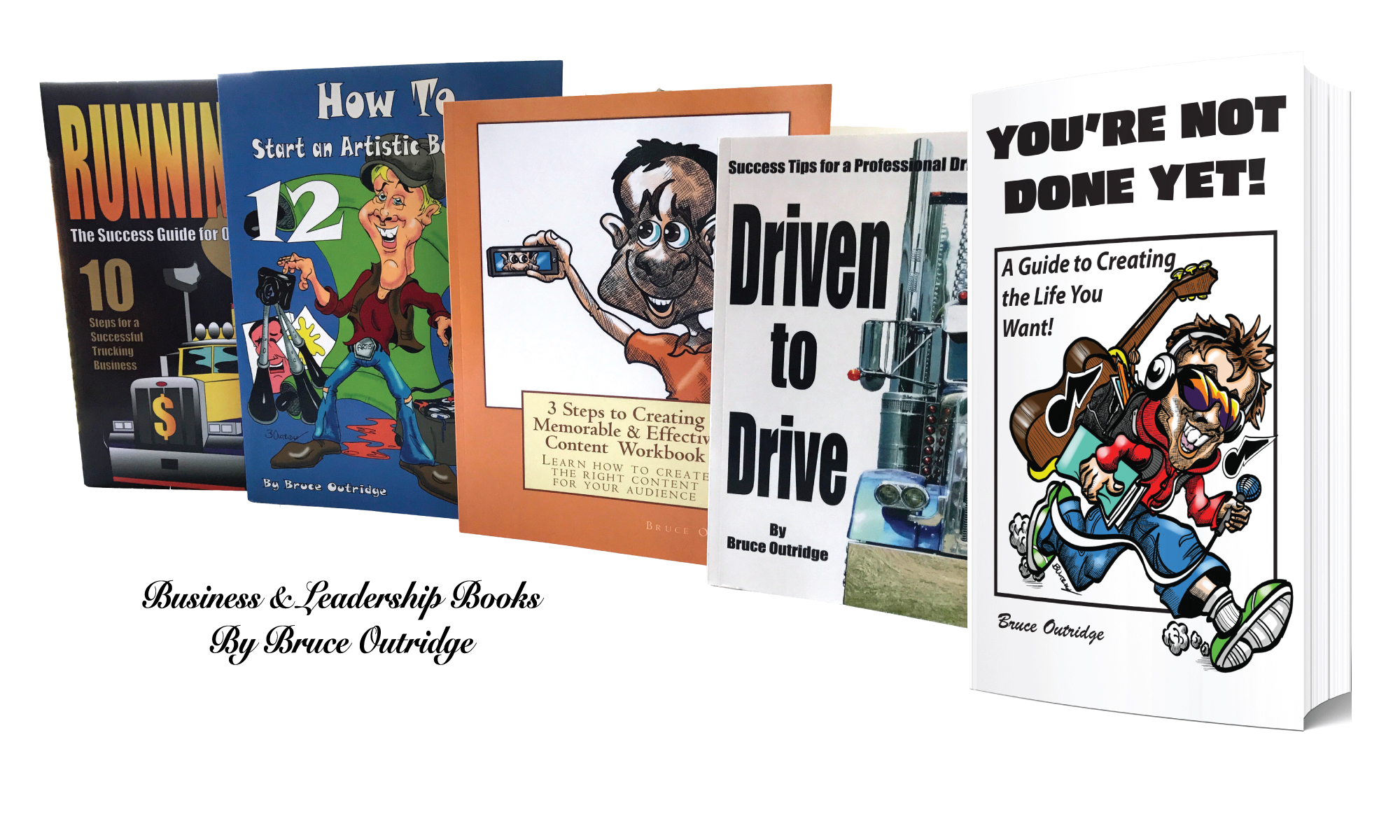
Get Bruce’s Latest Book

Get Bruce’s Books
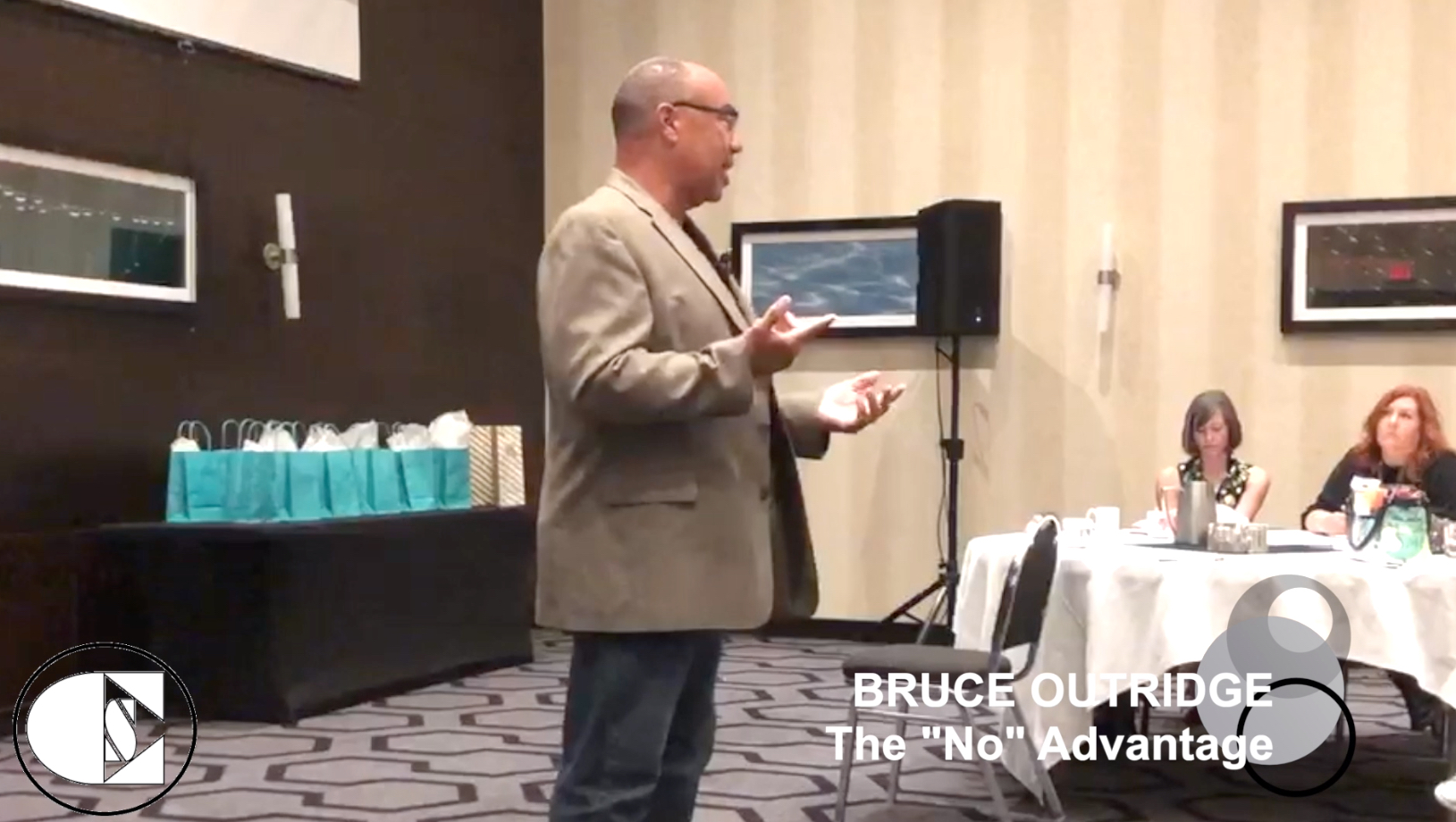
Book Bruce to Speak to Your Group
The Lead Pedal Podcast with Bruce Outridge

 The Lead Pedal Podcast
- An error has occurred; the feed is probably down. Try again later.
Bruce Outridge Productions




 Bruce Outridge