
Bruce Outridge
Artist | Author | Radio & Podcast Producer | Television Host
What Do You Do When Your Professional Board Disagrees?
As a business owner there are many tasks that you are responsible for and probably handle yourself. Everything from signing the big deal to cleaning the washroom may be in your list of jobs to be done at any given time. That is the joy and life of most entrepreneurs. Although many of us are good at multitasking we generally know quite a bit about several parts of our business but not everything. That is where the board of advisors come in for your company. The board may differ from company to company but usually consists of your acountant, your financial planner, your banker, and a business consultant. You may have more or less depending on the size of your business. Having all theses people on your board may make you feel that you’ve got a decent team behind you, that you will get financial and business advice that helps you grow. What happens however when the team doesn’t agree? When you are a small business keeping cash flow running smoothly can be a creative task especially if you have debt and obligations to pay. So as you are trying to do your best you are being told different things from each advisor, and the problem is that they are all right.
Here is what happened to us, we were trying to pay down debt and improve our financial picture. My partner and I had made a sound decision not use credit cards if at possible and live on cash. Our financial planner was elated and said that was the way to go. As our accountant was doing our taxes we were going over expenses and he said that it would be better to be paying certain items with the credit card as it helps in tracking items better in the long run, also the right advice. Our business consultant said try to increase your cash flow by reducing debt meaning that we should pay by cheque whenever possible, also the right advice. By now you are probably starting to see the disconnect that was starting between the advisors.
In the end the final decision comes down to you as as business owner. The team are advisors only and you have to do what is best for your situation. Just like the President you have to weigh each decision against the actual situation. When advisors give you advise they are advising from their outlook on the situation, which will be different for everyone. You have to make the best possible decision for your business based upon the facts and the best case scenario. Welcome to the world of business.
About the Author
Bruce Outridge is a business and leadership consultant for entrepreneurs. More information can be found on his website at www.outridge.ca
Working with Referrals
Have you ever gotten a referral from someone that turned out to be a very profitable project? It is a great feeling isn’t it? Have you ever given someone a referral that didn’t do what they were supposed to do? That probably left you feeling lower than an ant on the ant hill. Referrals are very important to business, to self esteem, and to our integrity as a person. Whether you are giving someone a referral or accepting a referral how you act upon it or deal with it says much about you but also the person that the referral came from.
Back when I was starting at a moving company I was 17 years old, the boss liked the way I worked and asked if I knew anyone else that would like a job. He assumed that my friends would be as hard working as I was. The friend that I recommended turned out to be the laziest guy on the block, very loud, with no customer service skills at all. I felt terrible and he eventually got fired, but his work ethic was a direct reflection on me. I was too young to know that at the time and vowed it would never happen again. This has happened in business as fellow entrepreneurs that seem to be very driven and dedicated are looking for business. I give them a lead and tell them to take good care of the person and sometimes I am let down again by people not following up, or not getting them the information required promptly. I have been given leads that I follow up with, they accept the project, waste my time, and then seem to disappear. All of this looks worse on the person who gave the referral than the person that I am working with. I don’t understand why people go to business meetings, network, and spend most of their waking moments looking for business, then when it is handed to them through a referral they blow it by doing nothing or not following up properly, it blows my mind. So what is the best way to handle referrals and be successful.
First, when you have been given a referral follow up immediately with the client. Treat that client as gold and make sure you inform the client that your friend is an amazing person and thought the contact would be a good fit for the project. Once you’ve contacted the client respond back to your friend, thank them for the referral and give them a status on where the conversation ended and the next steps to be taken. Once the project is completed you may want to thank your friend with a lunch or small gift, of course the best thing is to refer business in return to them if applicable. If the client was referred for one project only and is a client of your friend then any future sales or contact should go through your friend unless otherwise arranged. Don’t steal a client from your friends it won’t take you very far down the road. Blow a referral and you may be blowing future business right down the toilet.
About the Author
Bruce Outridge is a business and leadership consultant. He specializes in two areas namely transportation and the visual arts and helps entrepreneurs start and run successful businesses. For more information visit his website at www.outridge.ca
Evaluating Your Target Market
As a marketing coach for many clients I am generally setting them up with a marketing plan to help improve their business. Before creating that special marketing plan that will take your company to the next level you need to know who you will be marketing to and why. Many of the answers I get from clients are to everyone, or the Southern Ontario area. That my friends is too broad an area to market to and will bring you little results.
You must know your market inside and out and the best way to do that is to look into your records to find out who hired you for your services before? If you are spending time marketing to large corporations and all the people hiring you are Ma and Pop businesses your marketing efforts are being wasted. Now before you think that you have hit the nail on the head, I want you to think even deeper into your brain and think about who you talked to originally to get the job, and how you came into contact with them? These are all pieces of the marketing plan that need to be part of how you contact your clients. Personalize it as much as possible and you will have a marketing plan that works for you. If you are dealing with older people in the wilderness having a terrific online marketing strategy will not help you.
Your target market profile should look like this as an example; My target market is Judy, she is 27, enjoys spending money on herself, has a good job, and is comfortable buying on the internet. She looks for deals online to help her shopping experience and likes to keep abreast of the latest fashions.
The more you know your client the better off you will be at reaching your target market. The example above is comfortable with buying online so she would be a good fit for online promotions. If your clients are not online shoppers it is okay even these days to still send them information by mail. Many of us get too hung up on being online and not focused enough on just contacting our clients. Getting it wrong can cost you big time in both money and time so work at perfecting that piece of the puzzle.
About the Author
Bruce Outridge is a business and leadership consultant. He helps small businesses strengthen their marketing plans to achieve financial success. Information on Bruce can be found on his website at www.outridge.ca
Creating a Marketing Plan for Your Business
Marketing, promoting, exposure, whatever word you use to describe how you get your message to the world is an important piece to any puzzle. Most companies scrap their marketing budgets and plans when things get tough. In speaking with a friend of mine the other day that produces a local trade magazine he is seeing big changes in the way companies are advertising and spending their marketing dollars. With the economy on the edge at times since 2009 everyone is watching their dollars in a desperate way of trying to not only keep a float, but keep the message continuing forward. The ones who do this successfully will win while the others with no plan will simply fall by the wayside. So how do you keep your message moving to the masses without blowing the wall out of the bank? Planning is the first thing, knowing who your customer is key, and knowing your budget is the other piece of the puzzle. I also believe in one more piece that most people don’t think of, your strengths, what are you good at, what comes of ease to you that can help send your message to the world?
Many times as I coach small businesses on their marketing efforts I encourage the person to write blogs or articles about themselves that can be used to get their message out. You can see the change in their faces as I finish my sentence. “I am not a writer” is the response often replied. I had an owner that went through the exercise and did manage to get out an article for my magazine Collar to Collar. He sweated over it for months, and when it was produced asked me never to ask him to do that again. Okay so I don’t want you getting a heart attack writing an article, but it can be a great way of letting people learn about you and your company.
When setting up your marketing plan you have to take all of your clients, products, and services into account. How are people seeing you is it the web, network meetings, print ads, how do they see your message? Decide how many dollars you have in your budget for marketing and which avenues are most important to you? Take into account online promotion, offline promotion, local promotion, and national promotion. Now look at the best methods under those areas and figure out the lowest cost, but best method for reaching the people in those areas. You may have to break it down into product or service segments depending on the nature of your business. Don’t just jump on the online bandwagon and forget about the offline marketing or you may find your business actually goes down. The plan works as a whole so make sure the whole plan is included.
About the Author
Bruce Outridge is a business and leadership consultant. He helps many business small and large with their marketing and social media programming. For more information visit his website at www.outridge.ca
Learn About Inspiring Youth TV

Watch Cashing in on Creativity Television

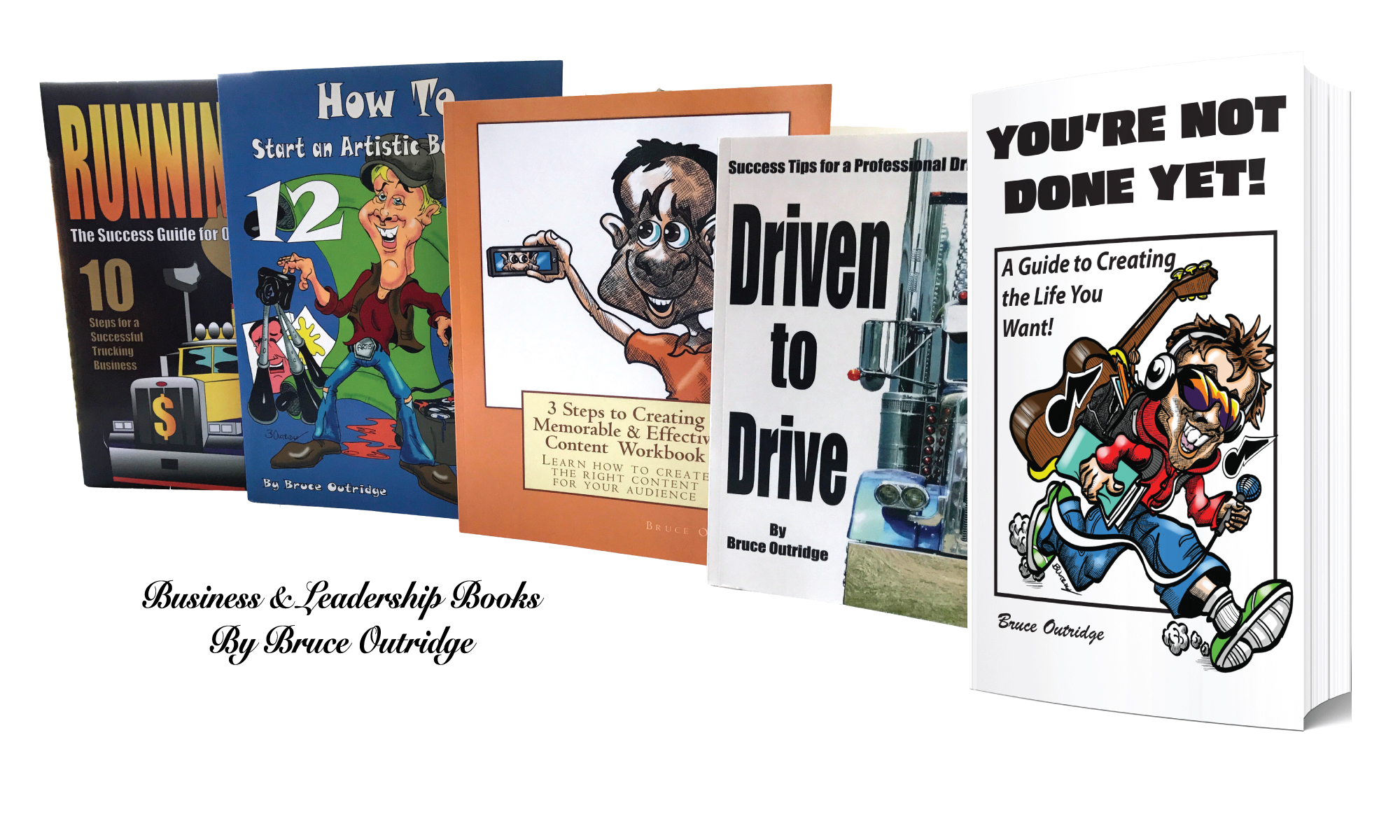
Get Bruce’s Latest Book

Get Bruce’s Books
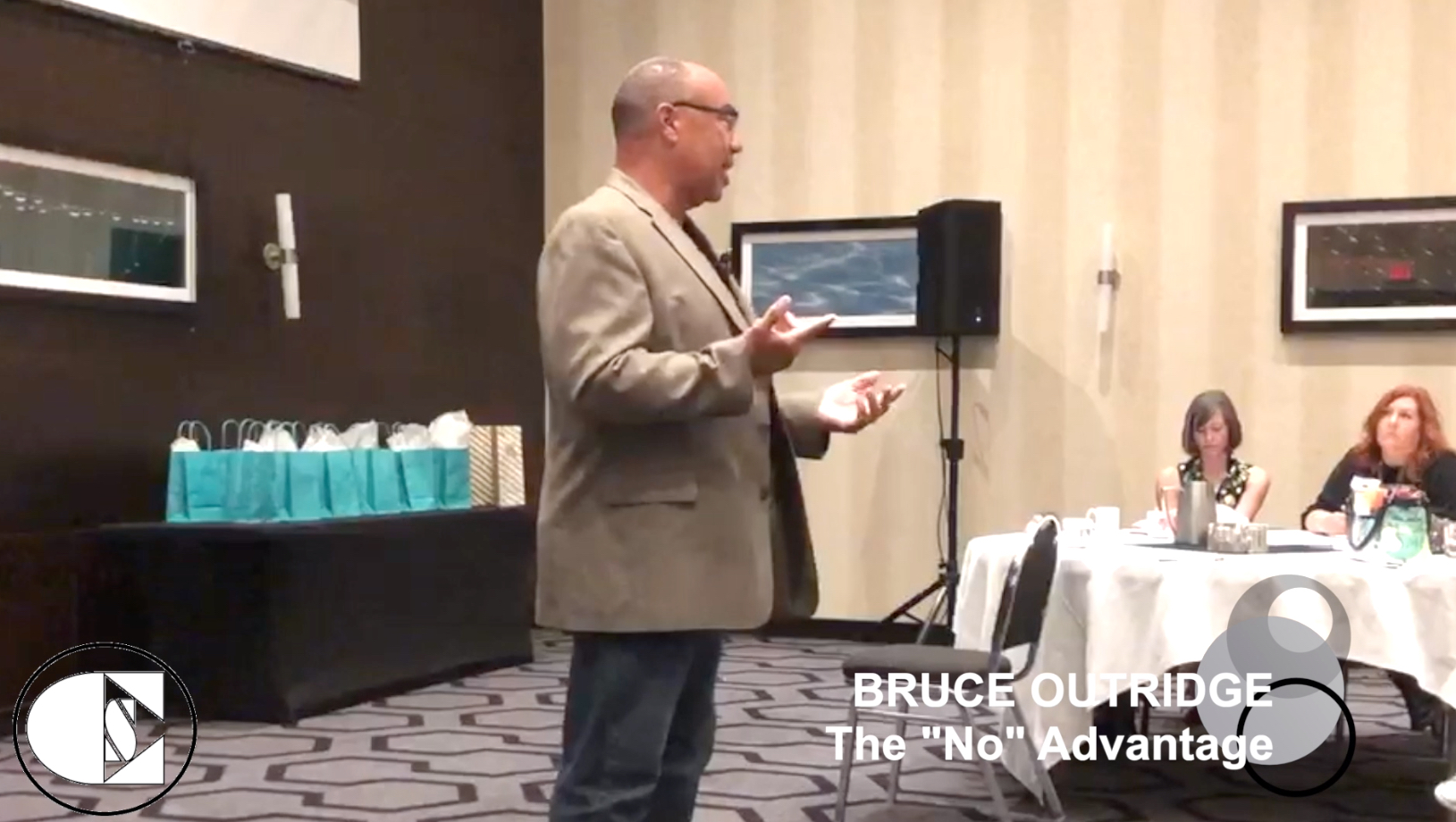
Book Bruce to Speak to Your Group
The Lead Pedal Podcast with Bruce Outridge

 The Lead Pedal Podcast
- The Road to Red Seal-Why Trucking Must Raise the Bar in 2026: LP1542
- Why Red Seal Could Change the Trucking Industry | John DeGroot Explains: LP1541
- Red Seal or Real Road Experience? Veteran Driver John DeGroot Tells It Like It Is: LP1540
- From Driver to Recruiter to Podcast Host | The Career Evolution of OJ Sidor: LP1539
- Life Behind the Wheel with OJ Sidor | Real Stories from the Road LP1538
- Lead Pedal Transportation Events Calendar March 2026
- What's New on Lead Pedal? March Updates, Radio Highlights, Fan Club & Upcoming Guests! LP1537
- Purchasing Equipment as a New Owner-Operator | Robert Misheloff: LP1536
- Financing a Truck as an Owner-Operator: What You MUST Know | Robert Misheloff: LP1535
- Shifitng Gears Ep13: Built to Last-Owner-Operator Success Stories
Bruce Outridge Productions





 Bruce Outridge