
Bruce Outridge
Artist | Author | Radio & Podcast Producer | Television Host
Have You Been in the Game Too Long?
Everyone has a comfort zone and it’s easy to stay in a place that is warm and cozy and closed off to threats, you can feel protected in a place like that, but are you really? Often that type of environment gives a false hope of what is really happening in your life. This is especially true in business and careers where people are making good money, have freedom to do their work unsupervised and don’t feel the need to keep pushing themselves forward. In business if you aren’t pushing yourself forward you will find yourself dead in the water wondering why everyone passed you by, you need to keep improving and redeveloping. This is also true for careers.
I was on the panel for a career fair a few weeks ago and was talking with an individual that had been driving truck for many years. He had some incidents on his license from the past and had worked for companies that didn’t see those issues as a threat. Recently he was fired for what seemed like no reason at all, but when listening to his story I believe the company he worked for started to see a pattern and decided to no longer take the risk. He is now having trouble getting a job doing what he has done for his whole life. As I spoke with him at length we determined that he may be better to start looking at other positions in the industry that don’t require driving capabilities therefore taking the focus off of his record. He was extremely happy with this new direction and went bouncing out of the event.
If he had started to look at another path even when he was driving he may have been able to move in that direction without losing income or reputation. When you’re eighteen or twenty it is hard to see the future past the age of forty, anything after that seems like old age. As you move along in life you need to keep evaluating your future and that may be due to employment, health related matters, or retirement goals. Always be evaluating your current position, is it fulfilling, is it stable, if something happened to the industry or company tomorrow do you have other talents you can do? Asking these types of questions periodically will help keep you open towards learning new skills, keeping your eyes open to other opportunities, or improving your own intelligence. Don’t do what I see too many people do, just bobbing along in life hoping it will turn out alight in the end. The end may be closer than you think!
About the Author
Bruce Outridge is a business and leadership consultant and author of the books “Running By The Mile” and “How to Start an Artistic Business in 12 Easy Steps.” For more information please visit his website at www.outridge.ca
Take Some Goodnotes!
If you are anything like me you are always looking for ways to improve efficiency of your operation. One way of doing that is by using technology to the fullest. As many of us are proud owners of tablets, smart phones and other technological advances carrying a paper and a pen seems redundant. Think about it what happens with a piece of paper, you have taken great notes and the paper lands on your desk back at the office. Once dealt with the topic you either have to file it, throw it out, or share it. What happens if you need to go back and refer to that document, can you find it? This is why using a tablet or smart phone is a great way to combat that as everything is in one place. If you need to share the notes with someone then you have choices such as emailing it, sending it by phone and more. I am one of those people that is trying to take my business paperless as much as possible, I don’t think I will ever get there totally, I just don’t trust computers enough not to crash as of yet but maybe in the future.
Most tablets come with some sort of notes application that allows you to take notes by typing them out and sharing them with others. I like the app itself but when in a meeting typing is not an option for me as it takes too much concentration. I have to concentrate so much on my typing skill that it is pretty rude of me to take notes in a meeting by typing. I wanted an app I could write with that would allow me all of the conveniences of having the information on my tablets. The problem is that you can’t write in the notes app on an iPad which I have so I had to find something different. For me the answer was Goodnotes. Goodnotes allows you to write your information out by hand as if taking notes on paper. You have options such as using lined or plain paper, adding pages, renaming documents, and adding images and graphs. Your documents are sorted like a bookshelf allowing you to delete ones no longer needed or filing as you would with a traditional filing cabinet. There is a free version and a paid version for under five dollars. I suggest the paid version as the free version doesn’t allow you to do much. There is one problem however, if you have an iPad there is no stylus to write with. The solution to that is to buy a stylus at the office supply store and it will work with that app, so you can write notes as if having a full pad of paper that never runs out. I have been using the app for months now and really like it. May I suggest you carry a traditional pen in your pocket, after a while you get so used to not carrying paper that that when you are asked to sign something you will pull out your stylus? Try the app out for yourself and see if it doesn’t make you world less filled with paper.
About the Author
Bruce Outridge is a business and leadership consultant and has been in the transportation industry for over 30 years. For more information on his work please visit his website at www.outridge.ca
Being an Entrepreneur is Like Breaking Out of a Shell
One of my favourite types of foods are peanuts, even better are the ones that you have to break the shell to get them out sometimes to find they are not very big. Recently we were on vacation and I was munching on a bowl of these peanuts and watching the activities in the streets and I started thinking how similar the peanuts were to entrepreneurship. Now don’t start emailing me with comments I am not making fun of entrepreneurs more so the fear factor that goes with entrepreneurship. Think of yourself as the peanut in that shell. Sometimes when people try to break open the peanut shell the peanut breaks in half, this is the entrepreneur that has an idea, but is afraid to move forward so they do everything to make sure the shell breaks away from them. Then there are the peanuts that you find two inside half the shell, these are the entrepreneurs that are sticking close to family because they will tell them how great their ideas is so that they don’t offend them. Finally we have the entrepreneur that jumps right out of the shell on the first break and are ready to go and challenge the world.
Entrepreneurship is not easy, but it is exciting and something that should be viewed as a start on a journey. The important part is to start down that journey and keep tweaking the processes and service you offer until you a successful formula. Many entrepreneurs keep investigating an idea until it is thought out it so much it has passed the introductory phase and is on the market be someone else. Entrepreneurship is meant to be a little scary, it is meant to keep your blood pumping, and the possibility failure or success is what keeps you working hard at your venture.
If you are the first type of entrepreneur afraid to jump out of your shell then find someone with the strengths you lack and take that leap. If you are the second type of entrepreneur that is sticking by friends to keep a friendly atmosphere, but never getting the venture started then find someone you don’t know or introduce it to the market and see if people by it. Friends and family may be telling you what you want hear, but that is not always helpful. If you’re the third type of entrepreneur give it all you got and never look back. The road is ahead of you. Either way becoming an entrepreneur is all about breaking out of your shell.
About the Author
Bruce Outridge is an entrepreneur and author of the books “Running By The Mile,” and “How to Start an Artistic Business in 12 Easy Steps.” For more information on Bruce and his work please visit his website at www.outridge.ca
What’s Your Jump Start?
An article written by a major publication in the transportation industry rocked the industry as it reported that one of the major carriers who have been in the industry for almost one hundred years decided to let go of all of their company drivers to move toward an owner operator driven company. This company has always been a staple of the industry and the news certainly sent rumbling throughout the industry. I feel for those poor drivers and am sure they will find work with another carrier. It got me to thinking, what makes a person wake up and decide to take their fate into their own hands? In this instance do the drivers find other driving positions, do they buy a truck and become business owners, or do they decide to retire from the industry with a fowl attitude and spread bad blood throughout. I certainly can understand the latter but don’t suggest it.
For myself the end of my employee cycle came in the corporate environment when I found they were looking for a puppet rather than someone who can grow a team and stand behind their decisions. Out of frustration I decided to make my mark on entrepreneurship a serious one and have never looked back. Do people wait for something bad to happen or do they go with the flow and continue down the same old road? There must be a time when you decide to take your life in your hands and grab control, but what sets that off? My calculation is that most will go into reaction mode and probably panic mode and will try to grab the first thing that comes along. They then get comfortable and forget about following their dream or future ambitions. Making sound decisions is the best way to attack the shock of a job and the people that have taken that step to do things right very rarely look back thinking they made a mistake. I personally am glad that I made the jump at the time to becoming an entrepreneur, it has opened a whole new world and allows me to grow in a way that is just not possible in a regular job no matter how well paid.
Once a company changes the culture through a major change it is usually never the same as it was before so the people that try to hold onto those jobs are normally disappointed that they didn’t move on. So I ask you what is your jump start? What makes you want to move on for yourself, take control of your destiny? Maybe it isn’t even entrepreneurship, I know not everyone is cut out for business but there are still ways of taking control of your future. Maybe this is the time to upgrade your skills, start a new position using you expertise or simply expand your horizons. People who lay flat waiting to see what happens will find they are left in the dust, talk to anyone who hasn’t upgraded their computer skills in the last decade. So here is the question to you, what is your jump start to a new life?
About the Author
Bruce Outridge is an entrepreneur, and business and leadership consultant for the transportation industry with over 30 years of experience. He is the author of the business books “Running By The Mile” and “How to Start an Artistic Business in 12 Easy Steps.” For more information on Bruce and his company please visit his website at www.outridge.ca
Trucking in the Caribbean
How many miles can you run on an island that is only 23 miles long? Long haul has a whole new meaning with that perspective. As a veteran of the transportation industry here in Canada covering many areas from owner operator to fleet supervisor I can officially say that trucking is in my blood. Even though I know longer drive trucks they still catch my eye on the road, I will always loved the so called “Large car” and I still believe transportation is one of the best industries to be a part of. So when I am on vacation or out of the country on business I have a habit of still keeping an eye on the industry and how it is done elsewhere. Recently my wife and I were on vacation in Barbados in the West Indies. The island is beautiful with some of the friendliest people on the planet and a society known for being well educated. We had been to the island many times before but this time was the longest we were staying on the island and so I had hoped we would get to see more trucks than in the past.

With an island only 23 miles long and the largest road on the island, the main highway that covers the island is the same width as one of our small city streets, no large Interstates on this island, so naturally vehicles are shorter and smaller in scale. They also drive on the opposite side of the road to North America making it seem quite odd when they turn corners. Although they drive on the opposite side of the road many of the units on the island come from North America. I believe I recognized my old International Eagle cabover while I was there and Frieghtliner and Kenworth all have a presence on the island. I met many Canadians and people from Europe on the island as it is a popular vacation spot for both countries and those that were involved in transportation in one form or another all said the same thing, “They would not get away with that back home.” What we were referring to were safety violations that seemed apparent everywhere. Due to the island’s size there are not a lot of large trucks on the road. In the four weeks we were there I saw a total of ten tractor trailers and most were bobtailing. Most trailers are pup trailers as the roads aren’t wide enough for anything full size with the largest being a 45 foot trailer. Companies that deliver fuel, propane, or similar products all run pup units. The tractors that I saw were all class 8 units but you can see that everything is second hand. Everything is shipped onto the island so I am assuming that trucks are ordered as required from North America or bought through resale avenues to the island. Since the island isn’t set up for long haul trucking the trucks that are available spend much of their time delivering product from the shipyard to the stores. Container trailers are abundant and are really the only trailer I saw the whole time on the island with the exception of fuel trucks. All other trucks are mostly straight trucks in various sizes used by locals to haul everything from pipes to produce. Many haul the workers in the back as well.
Maintenance had to be the biggest thing I noticed while on the island. There obviously isn’t any regulatory body watching the transportation industry. Everything from buses to trucks, to cars have items like taillights out, parts missing, and smoke worst than any city bus around in North America. Mud flaps are apparently hard to get as I noticed many units without them, I even saw one tractor trailer unit that had the side vent missing on the sleeper among other items missing. There are no inspectors on the island, in-fact Police are scarce enough and certainly there isn’t any inspection stations or weigh scales conducting safety checks on transport vehicles. That being said I saw very few accidents on the island and although people drive a little faster and seemingly wilder than here they seem to have a synergy that North Americans miss. Here we all seem to be out for ourselves, but on the island they share the road much better. If they are stopped or even driving for that matter they don’t block an entrance pretending they don’t see the other car, they always let people out and pedestrians no matter where they are have the right of way.
One of the big areas of difference between North America and the island were the way people use their horns. Many use their horn to say hello, how are you, let the other person go first, or let pedestrians across the street. Here in North America people use their horns to tell people off. I never use my horn unless needed so I found the whole ritual of honking for the heck of it refreshing in a way. In all the island is a great place to vacation and the people were excellent. Trucking there however is another issue. As much as we hate all the regulations in the transportation industry I think we are in a good place. Being on the island reminded me of North America 25-35 years ago. It may have been more fun, but not necessarily more safe.
About the Author
Bruce Outridge is a transportation consultant with over 30 years experience and is the author of the book “Running By The Mile.” For more information on Bruce and his work please visit his website at www.outridge.ca

Learn About Inspiring Youth TV

Watch Cashing in on Creativity Television
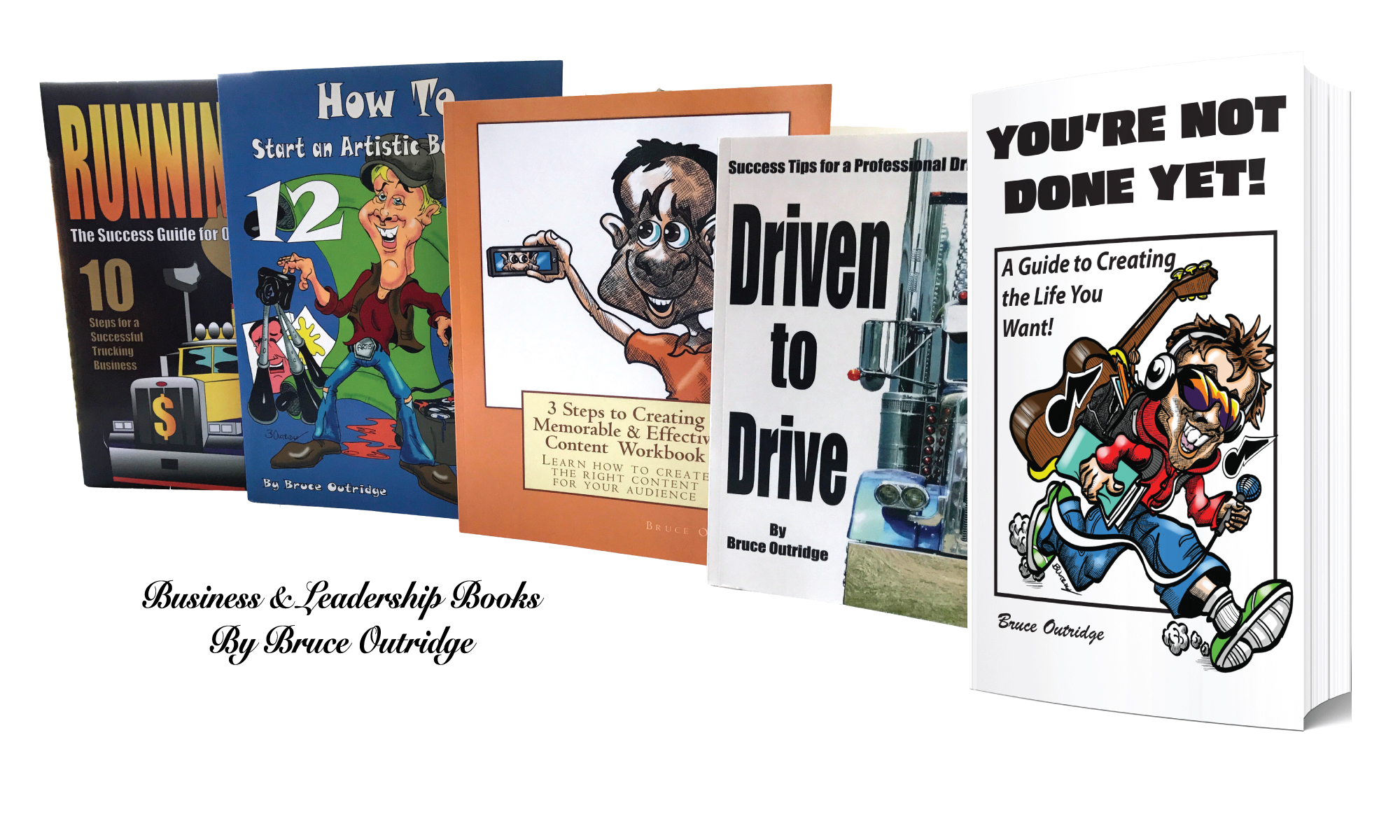
Get Bruce’s Latest Book

Get Bruce’s Books
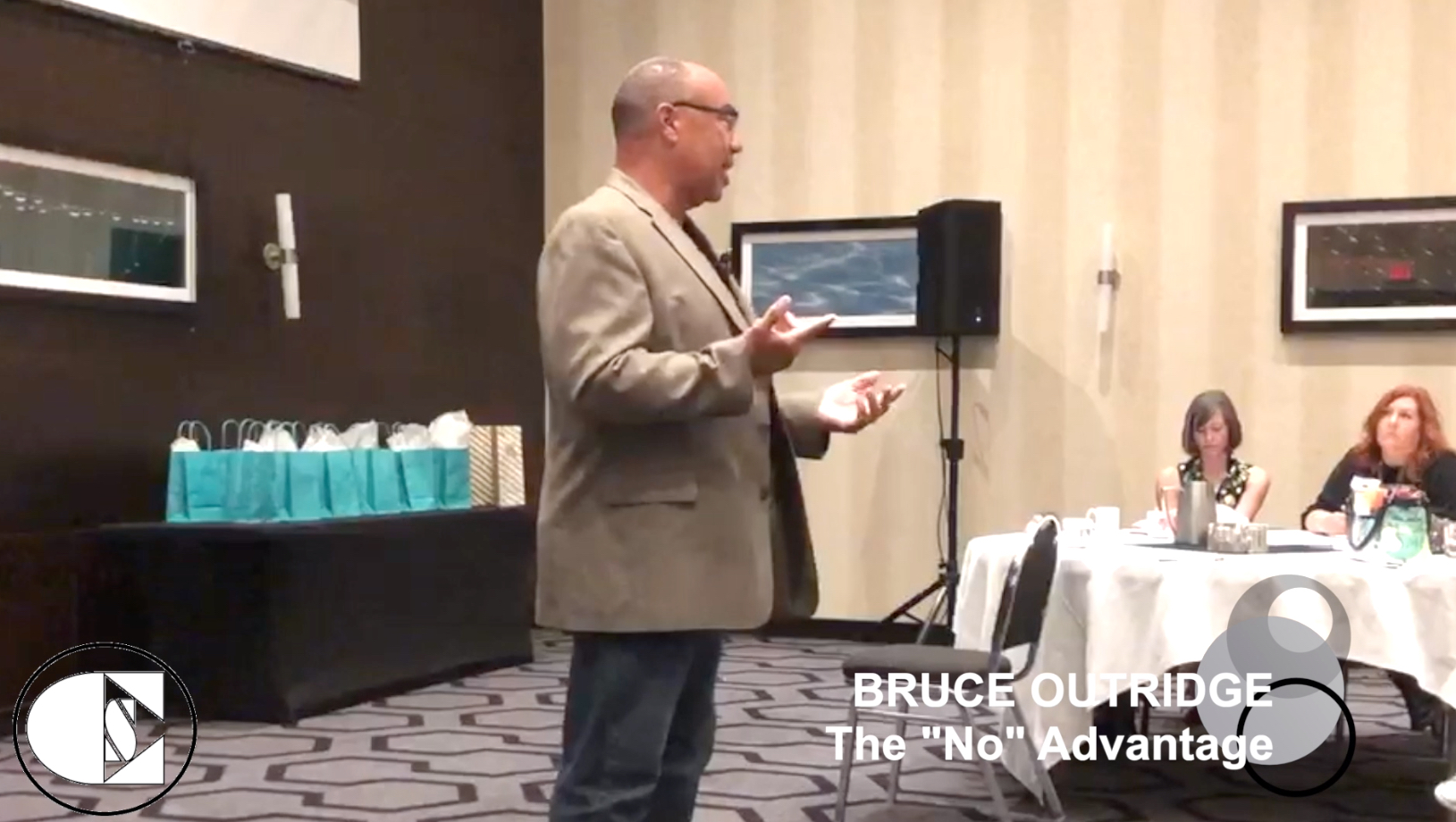
Book Bruce to Speak to Your Group
The Lead Pedal Podcast with Bruce Outridge

 The Lead Pedal Podcast
- From Trucks to Tunes | Highlights from the Chords & Chrome Show: LP1551
- April 2026 Trucking Events in Ontario | The Lead Pedal Podcast
- What's New for April 2026 | Big Updates from Lead Pedal Podcast, Radio & Media: LP1550
- Old School vs New Rules: What Veteran Drivers Really Think of Today's Trucking Industry: LP1549
- End of the Road: Gord Magill Writing the Truth About Trucking | Lead Pedal Podcast: LP1548
- The State of Trucking: Gord Magill Breaks Down the Industry Today | Lead Pedal Podcast: LP1547
- Shifting Gears Ep14: Raising the Bar-How Red Seal Certification Can Strengthen Canada's Trucking Industry
- Engine Oil Tips Every Owner-Operator Needs | Seasonal Advice with Karin Haumann of Shell Rotella: LP1546
- PTTAC Panel: What Carriers Really Think About Red Seal Certification: LP1545
- PTTAC Insurance Panel: The Insurance Industry's Perspective on Red Seal for Trucking: LP1544
Bruce Outridge Productions




 Bruce Outridge